Software Integration Patterns Influencing Bonus Release Timelines in Mobile Slot and Live Table Systems
Mia Berger · Oct 20, 2026
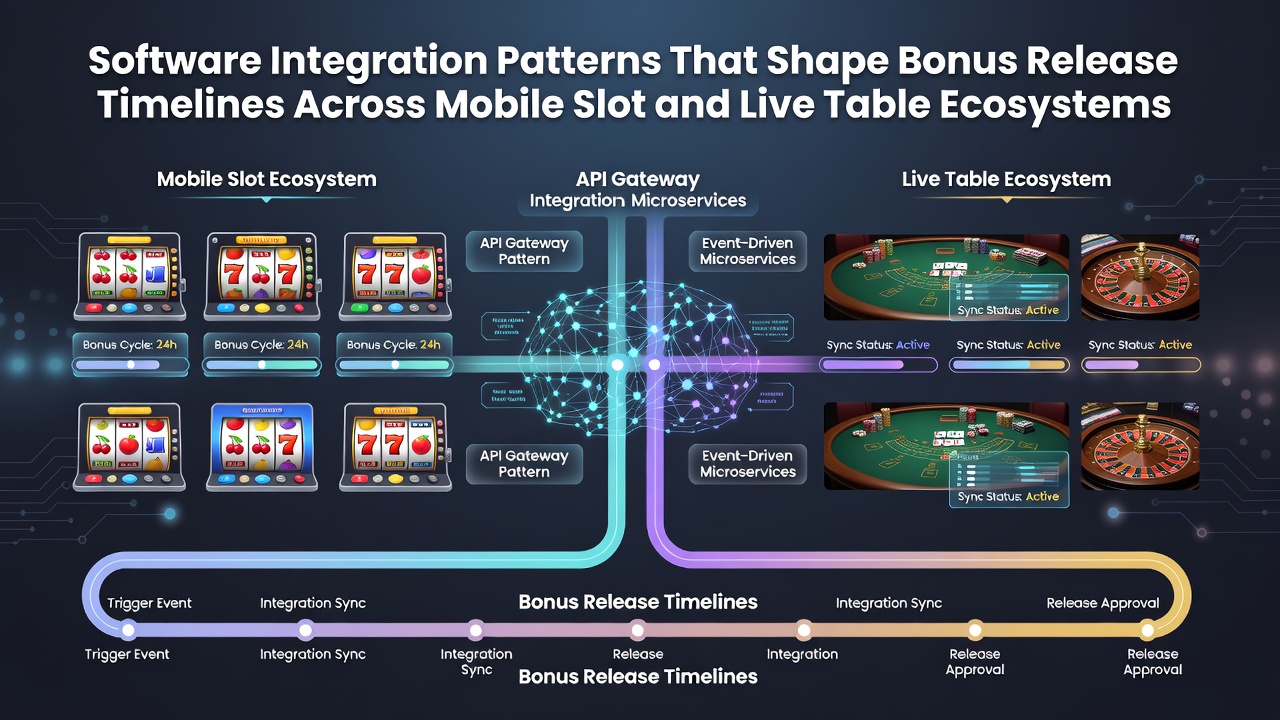
Software Integration Patterns Influencing Bonus Release Timelines in Mobile Slot and Live Table Systems
Software integration patterns determine the speed and reliability of bonus releases across mobile slot platforms and live table ecosystems through structured data exchanges and synchronization protocols. These patterns connect backend systems that handle player accounts, game outcomes, and promotional triggers, which means bonus credits appear only after specific data flows complete without interruption. Observers note that event-driven architectures often accelerate releases in slots because they process spin results as independent events, while live tables require coordinated streams from multiple dealer interfaces and camera feeds that introduce additional validation steps.
Core Patterns in Casino Software Architecture
Developers rely on microservices combined with API gateways to separate slot mechanics from live dealer modules, which allows each component to update bonuses independently yet share a common player ledger. Synchronous REST calls handle immediate checks for eligibility during login sequences, whereas asynchronous message queues using technologies such as Apache Kafka manage delayed triggers that accumulate across sessions. Research from industry technology reports shows these hybrid setups reduce latency in slot bonus drops to under two seconds in optimized environments, while live table bonuses tied to table minimums or streak achievements may require five to fifteen seconds because they aggregate data from separate video and betting streams.
Those who maintain large-scale deployments observe that event sourcing patterns preserve every state change as immutable records, which creates audit trails that regulatory systems examine before final bonus authorization. This approach proves especially relevant when platforms expand into October 2026 updates that incorporate enhanced identity verification layers across international markets. One case study from a North American operator demonstrated that switching to event sourcing cut disputed bonus claims by 22 percent because every trigger carried its full history forward without repeated database lookups.
Mobile Slot Ecosystems and Their Timing Dependencies
Mobile slot integrations frequently employ WebSocket connections for real-time reel updates that also carry bonus meter increments, allowing progressive jackpots and free-spin awards to release almost instantly after qualifying spins land. Data pipelines pull from player behavior analytics stored in cloud databases, then route eligibility flags through middleware that checks wagering requirements before crediting accounts. Figures from gaming technology associations indicate that slot bonus timelines average 1.8 seconds when these pipelines run on dedicated regional servers, yet cross-border latency can extend that window to four seconds when traffic routes through shared data centers.
Another pattern involves container orchestration with Kubernetes clusters that scale slot instances during peak hours, which prevents bottlenecks that would otherwise delay bonus releases when thousands of sessions activate simultaneously. Observers point to operators who adopted this method and recorded consistent sub-three-second credit times even during major promotional events. Integration with third-party loyalty engines adds another layer because those systems must confirm tier status before multipliers apply, creating brief but measurable pauses that players notice only when comparing timestamps across different devices.
Live Table Platforms and Coordinated Data Flows
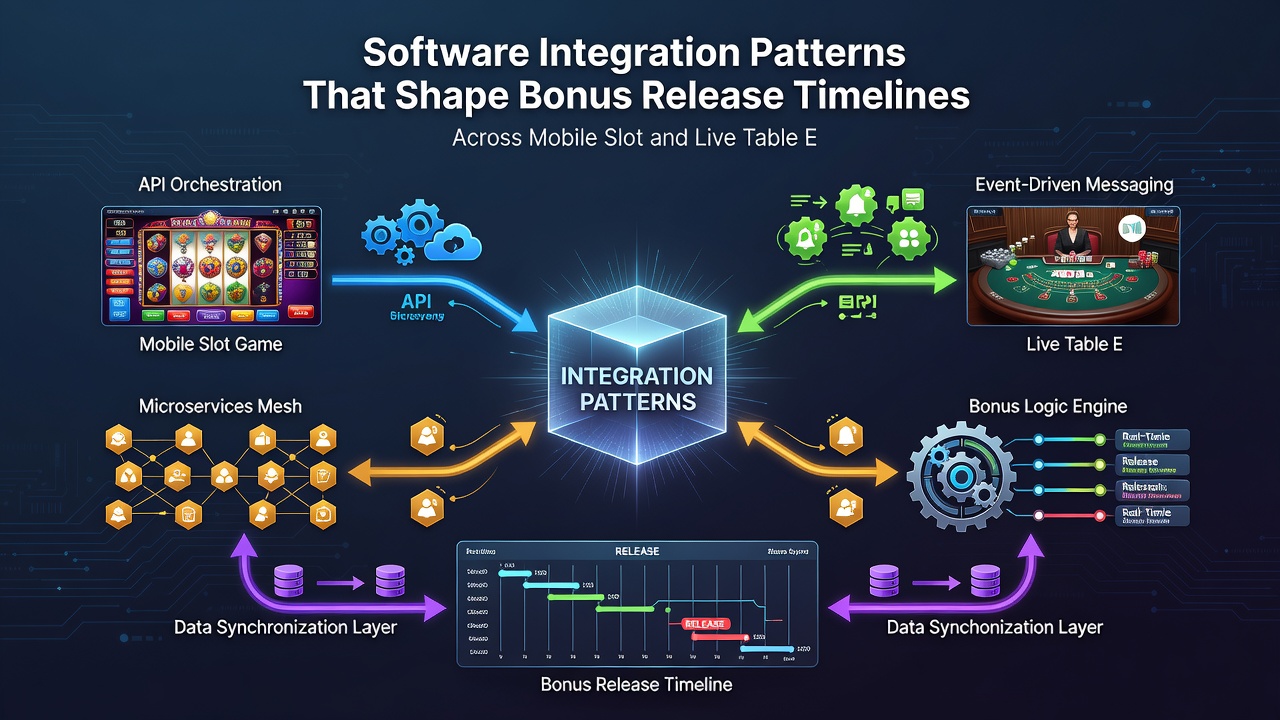
Live table ecosystems depend on tightly coupled integrations between dealer terminals, camera systems, and betting interfaces that feed into a central bonus engine. These setups often use publish-subscribe models where table events broadcast to multiple subscribers, including the bonus service that evaluates conditions such as consecutive wins or side-bet triggers. Because live outcomes arrive in continuous streams rather than discrete spins, synchronization delays occur when any single feed experiences packet loss or requires retransmission, which extends bonus release windows beyond those seen in slot environments.
According to a study published by the American Gaming Association, live dealer platforms that combined WebRTC for video with dedicated bonus queues achieved average release times of 8.4 seconds across tested sites, while older socket-based connections averaged 14 seconds. Patterns such as saga orchestration further manage complex bonuses spanning multiple tables by sequencing compensation steps, ensuring that partial failures trigger automatic rollbacks instead of leaving credits in limbo. Operators in the Asia-Pacific region have documented similar improvements after implementing saga patterns, with one operator reporting a 31 percent drop in support tickets related to delayed table bonuses.
Comparative Impact Across Ecosystems
When mobile slot and live table systems share the same player database, integration patterns must reconcile differing data velocities, since slots generate thousands of micro-events per minute while tables produce fewer but higher-value transactions. Middleware layers that normalize these streams allow bonus rules to execute uniformly, yet they introduce processing overhead that lengthens timelines whenever reconciliation occurs. A report issued by the International Gaming Institute at UNLV highlighted that platforms using unified event schemas reduced cross-ecosystem bonus discrepancies by 18 percent during simultaneous slot and table promotions.
Security layers such as token validation and fraud scoring run in parallel paths that can either accelerate or stall releases depending on rule complexity. Patterns that cache recent player risk profiles locally shorten these checks, whereas real-time queries to external databases add variable delays that prove more noticeable during live table sessions where timing expectations run higher. Those managing multi-jurisdiction operations note that regional compliance modules must complete before any bonus finalizes, which creates predictable but unavoidable pauses that differ by market.
Conclusion
Software integration patterns continue to shape bonus release timelines by dictating how quickly data moves between mobile slot engines and live table components. Event-driven designs, microservice boundaries, and saga-based compensation each contribute distinct timing characteristics that operators balance against regulatory and performance requirements. As platforms incorporate new verification standards through October 2026 and beyond, these architectural choices remain central to maintaining consistent credit delivery across both ecosystems.